-
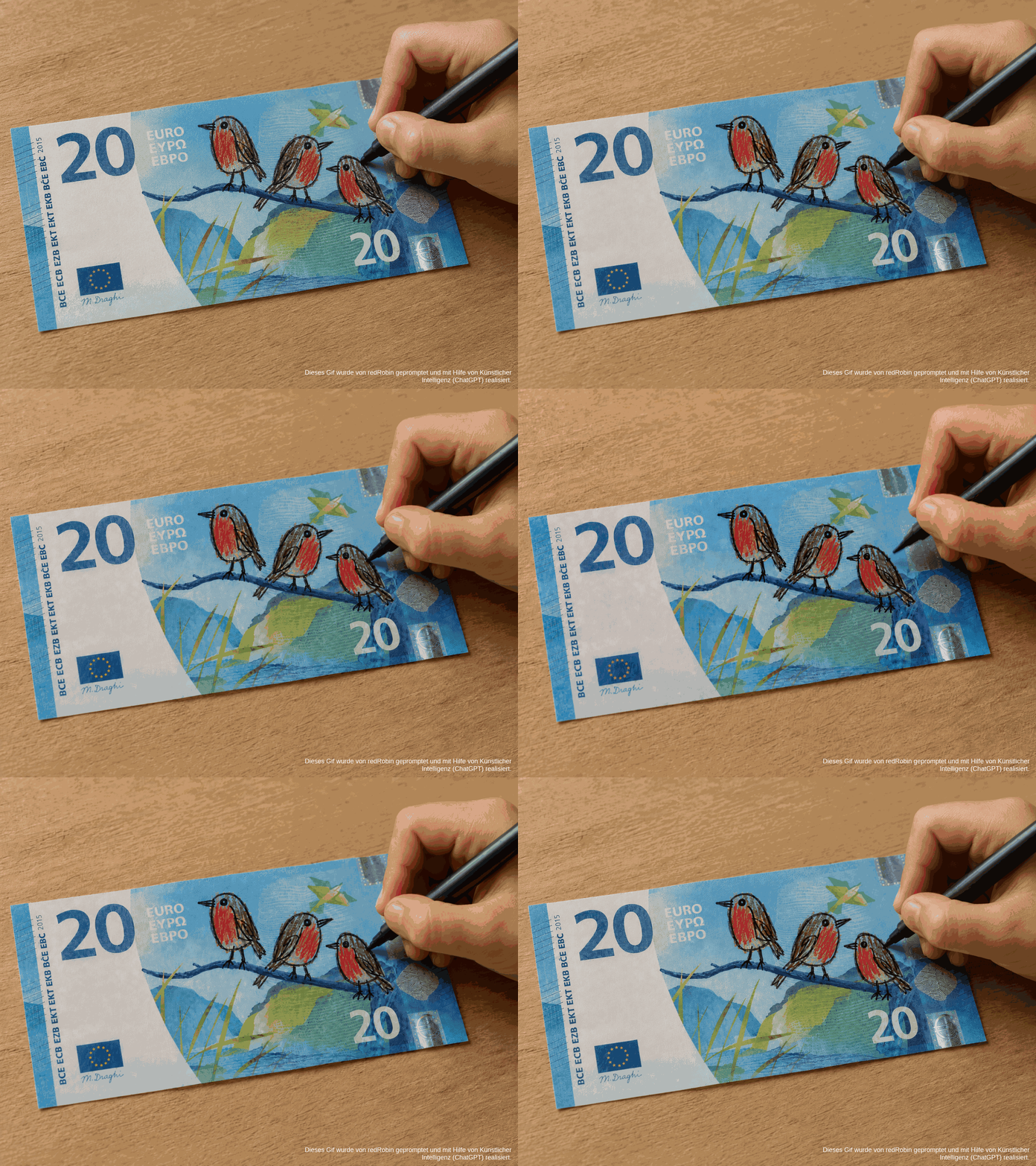
So könnte ein Entwurf des neuen 20-€uro-Scheins auch aussehen (Prompt redRobin, Umsetzung per ChatGPT)
Have you already cast your vote on the designs for the new euro banknotes? Until 22 September, the European Central Bank is inviting people to share their preference for the various design proposals. Two broad themes are in the running: “European Culture” and “Rivers and Birds”. In the following blog post, our Frankfurt colleague explains – with tongue firmly in cheek – why we think the ECB has made a rather glaring mistake with the latter.
In future, five bird species could feature on the new euro banknotes, each paired with an institution of the European Union. At least, that’s one of two concepts currently being put to a public vote by the European Central Bank (ECB). The idea is that our feathered friends would provide maximum political neutrality, while highlighting Europe’s shared natural heritage and biodiversity across national borders. And, of course, the birds could also serve rather nicely as a metaphor for some of the more eccentric characters the political landscape of the European Monetary Union regularly throws up – regardless of which side of the political divide they happen to be on.
So far, so good. And yet, the ECB appears to have made rather a glaring faux pas when choosing its birds, because one very important member of the flycatcher family is conspicuously absent: Erithacus rubecula, better known as the European robin. And we’re not just saying that because, as redRobinPR, we may have a slight soft spot for them.
A bird with all the right credentials for the euro
With a population of 133 million, the robin is one of the most common bird species in Europe. And symbolically, these charming little birds have plenty going for them too. They are remarkably hardy and stick around even when times get tough – in winter, for instance. That sort of resilience in a crisis certainly wouldn’t go amiss in a currency. Robins also have a rather special talent: they can communicate across species with a wide range of other birds. That’s a skill with obvious appeal to a communications agency, of course, but it also seems rather fitting for a currency area that brings together 21 member states and 19 different official languages.
We’re afraid the ECB may have little choice but to go back to the drawing board. How about swapping out the bee-eater on the €20 note for a robin, for example, with the ECB tower in Frankfurt on the reverse? Our work-experience student, Chaty, has already had a go at sketching what that might look like. And, if we do say so ourselves, it’s looking pretty smart already. The amendment request has definitely been submitted...
Have you already had your say on the designs for the new euro banknotes? You’ve got until 21 September to share your views. Here’s the link to the ECB’s website.